
We develop Junik Solar Park A & B: a 100 MWp ground-mounted photovoltaic park in western Kosovo, built to feed around 145 GWh of clean electricity a year into the 220 kV grid.
Helios Power sh.p.k. was founded in Deçan in 2021 to develop renewable energy projects in Kosovo. Our flagship is Junik Solar Park A & B: 100 MWp of photovoltaic capacity on 85 hectares of leased land in the Municipality of Junik, with its own substation and a connection to the national 220 kV transmission grid.
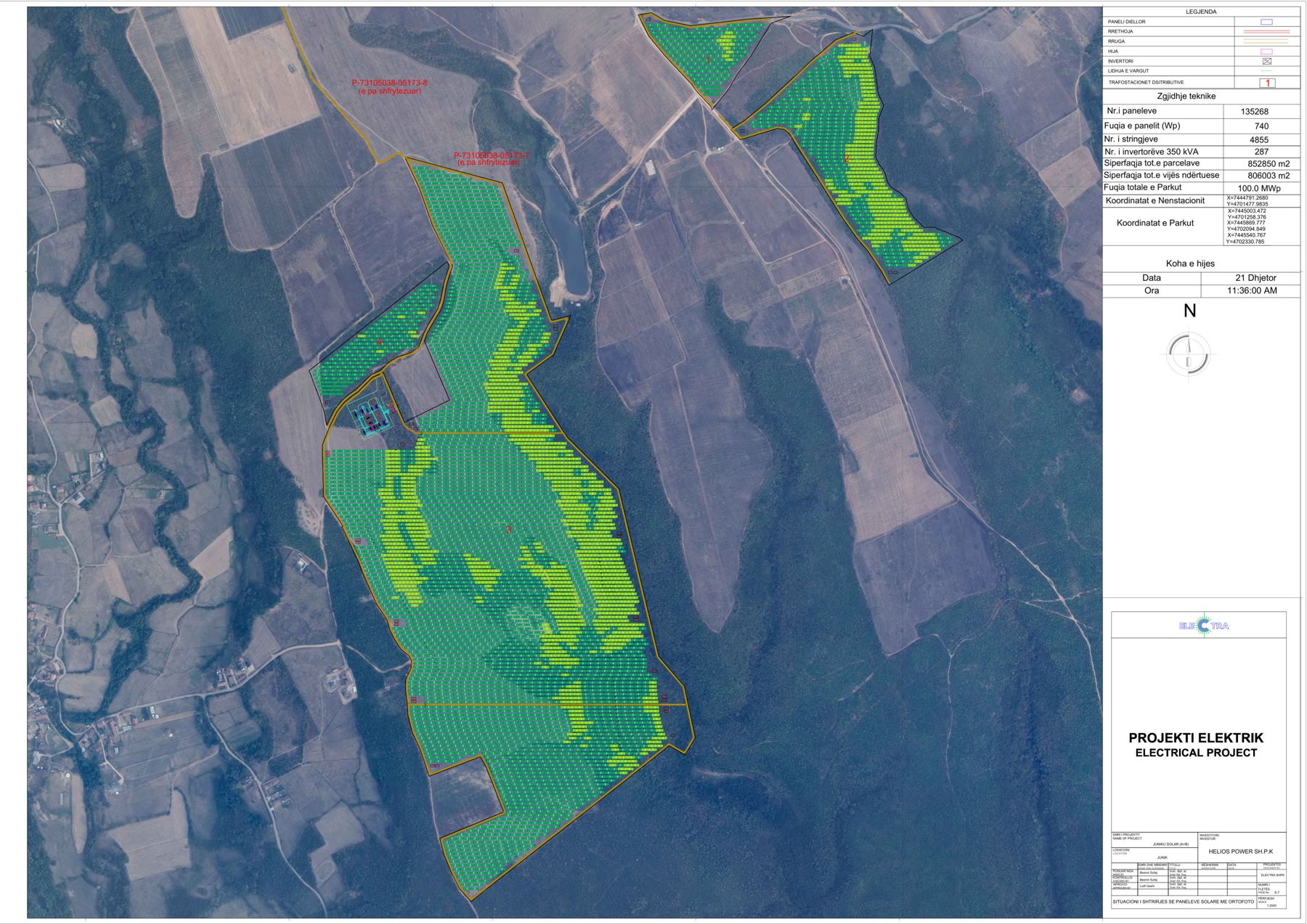
135,268 bifacial 740 Wp modules on fixed ground-mounted tables
Eight cadastral parcels in Junik, with asphalt road access on all sides
Two 80 MVA transformers stepping the park up to transmission voltage
About 8 km of new line into the KOSTT Prizren 2 – Fierzë circuit
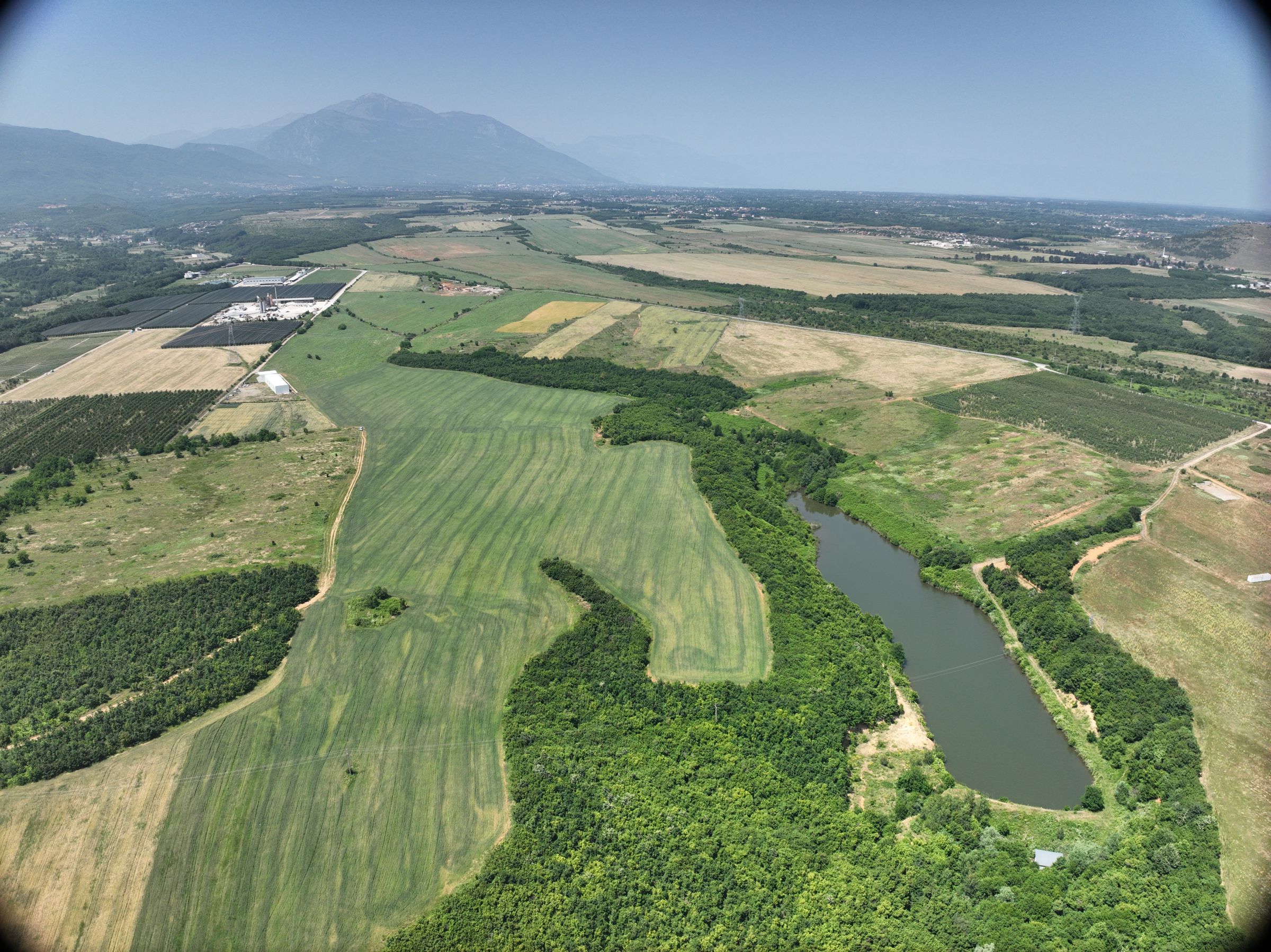
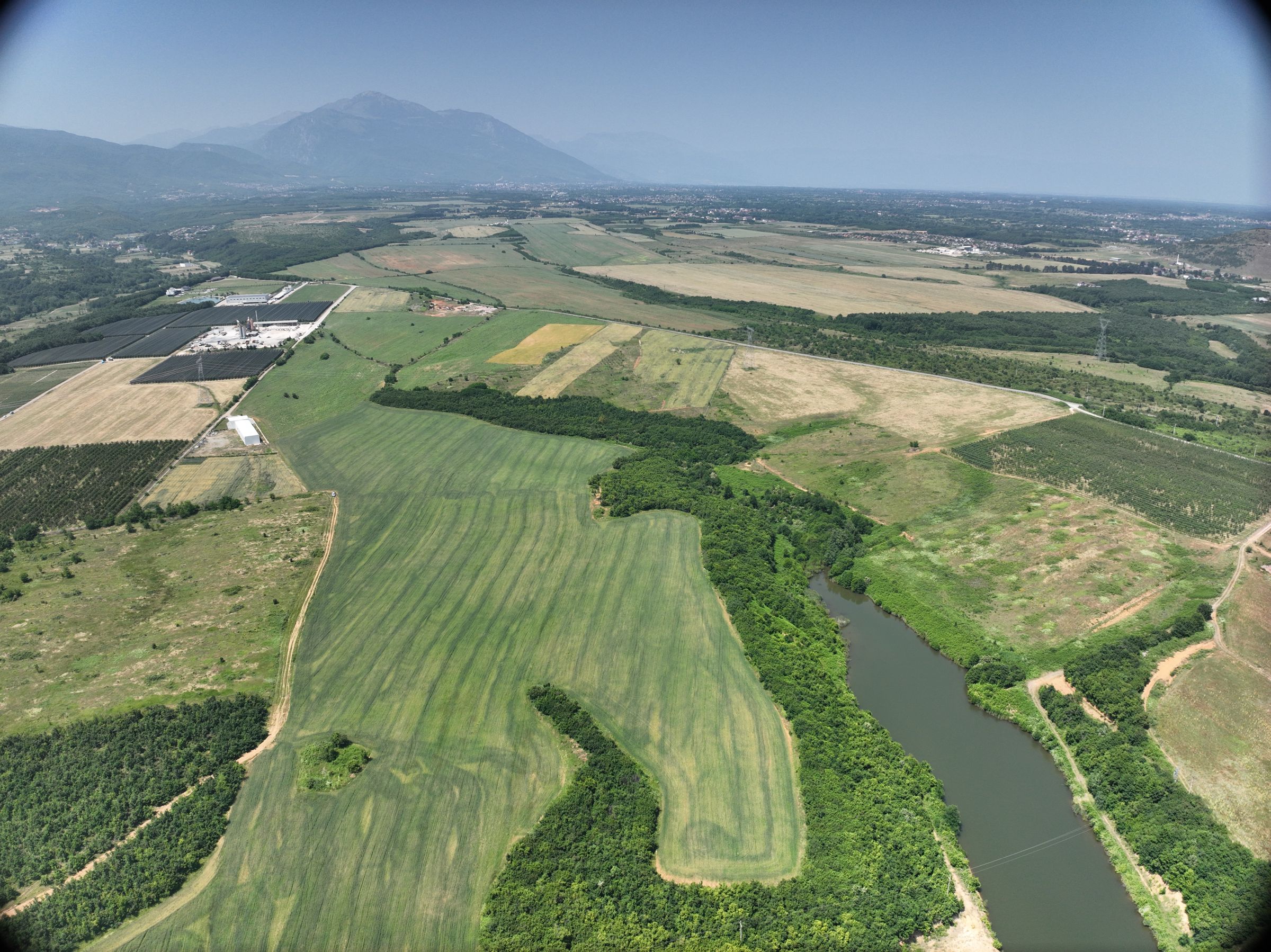
Drone footage of the project area in Junik, at the foot of the mountains in western Kosovo.
At 482 m altitude and 42.46° N, Junik receives strong, steady sunlight. The energy yield below comes from the project’s PVsyst simulation (June 2025) and its feasibility and ESIA study (October 2024).
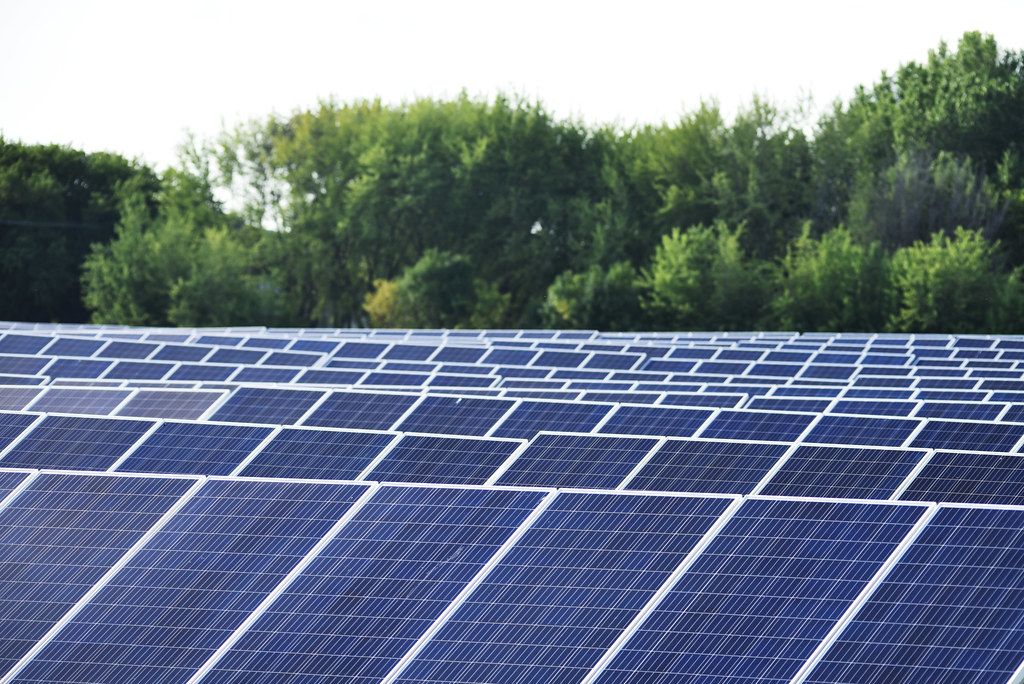
135,268 bifacial 740 Wp modules on 19,324 fixed tables facing south at 25°, feeding 287 string inverters. Module rows sit about 4 m apart. The park is planned to reach commercial operation within 12 months of the start of construction.
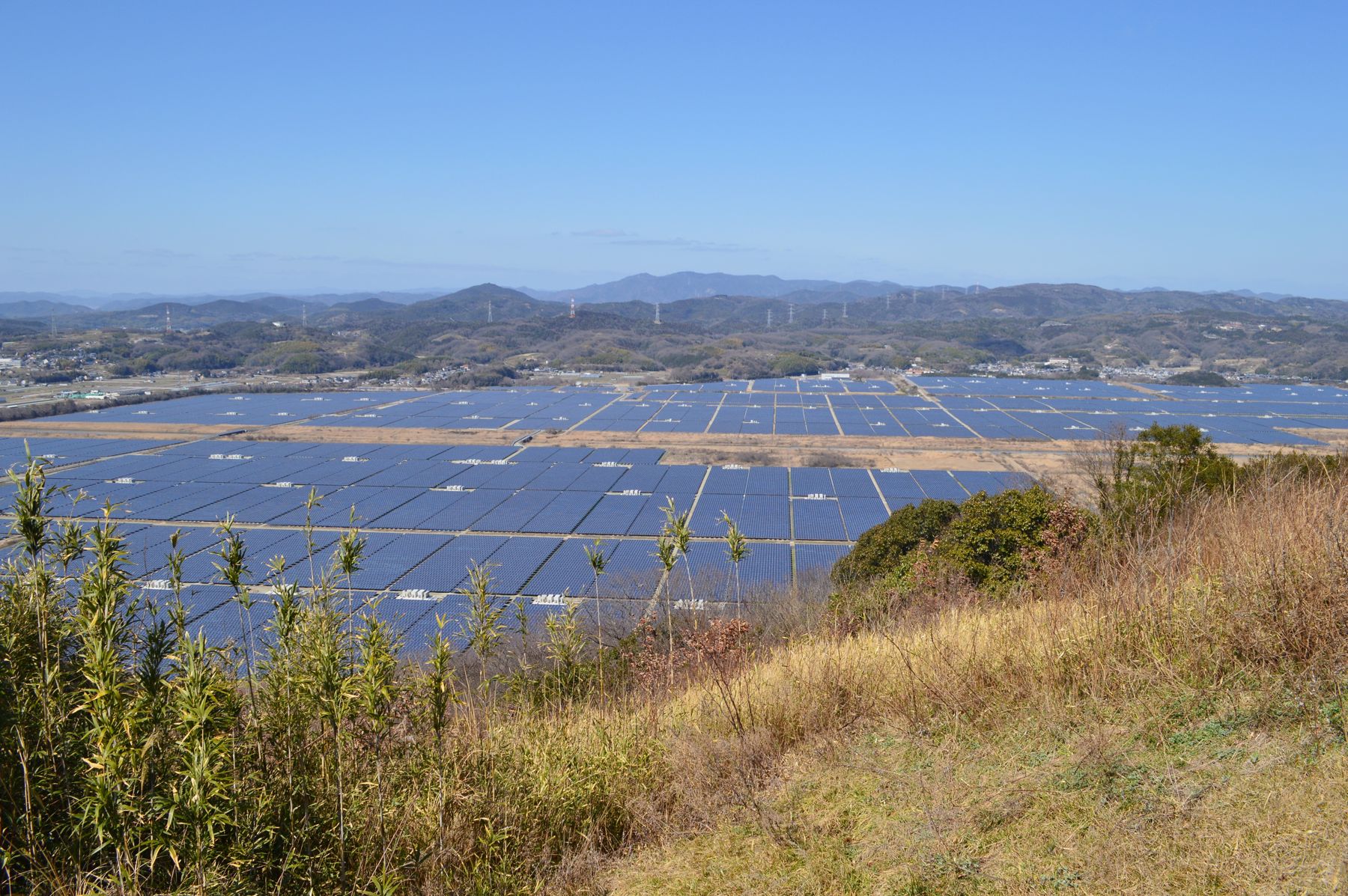
Kosovo’s grid runs mostly on lignite, at about 1,220 g of CO₂ per kWh. Replacing that power with solar from Junik avoids around 4.4 million tonnes of CO₂ over the park’s 30-year life, after counting the emissions of building it.
The simulation gives 145,004 MWh delivered to the grid in an average year, from 100 MWp of modules and 100.5 MWac of inverter capacity.
| Operating year | Electricity (MWh) | Yield (kWh/kWp) | CO₂ avoided (t) | Cumulative (GWh) |
|---|---|---|---|---|
| Year 1 | 145,004 | 1,450 | 176,905 | 145.0 |
| Year 2 | 144,279 | 1,443 | 176,020 | 289.3 |
| Year 3 | 143,558 | 1,436 | 175,140 | 432.8 |
| Year 4 | 142,840 | 1,428 | 174,265 | 575.7 |
| Year 5 | 142,126 | 1,421 | 173,393 | 717.8 |
| Year 6 | 141,415 | 1,414 | 172,526 | 859.2 |
| Year 7 | 140,708 | 1,407 | 171,664 | 999.9 |
| Year 8 | 140,004 | 1,400 | 170,805 | 1,139.9 |
| Year 9 | 139,304 | 1,393 | 169,951 | 1,279.2 |
| Year 10 | 138,608 | 1,386 | 169,102 | 1,417.8 |
| 10 years | 1,417,845 | – | 1,729,771 | 1,417.8 |
Year 1 is the PVsyst simulation for Junik (145,004 MWh, Meteonorm climate data). Later years assume the simulation’s 0.5% yearly module ageing. CO₂ uses Kosovo’s grid factor of 1,220 g/kWh (IEA). Actual output varies with the weather each year.
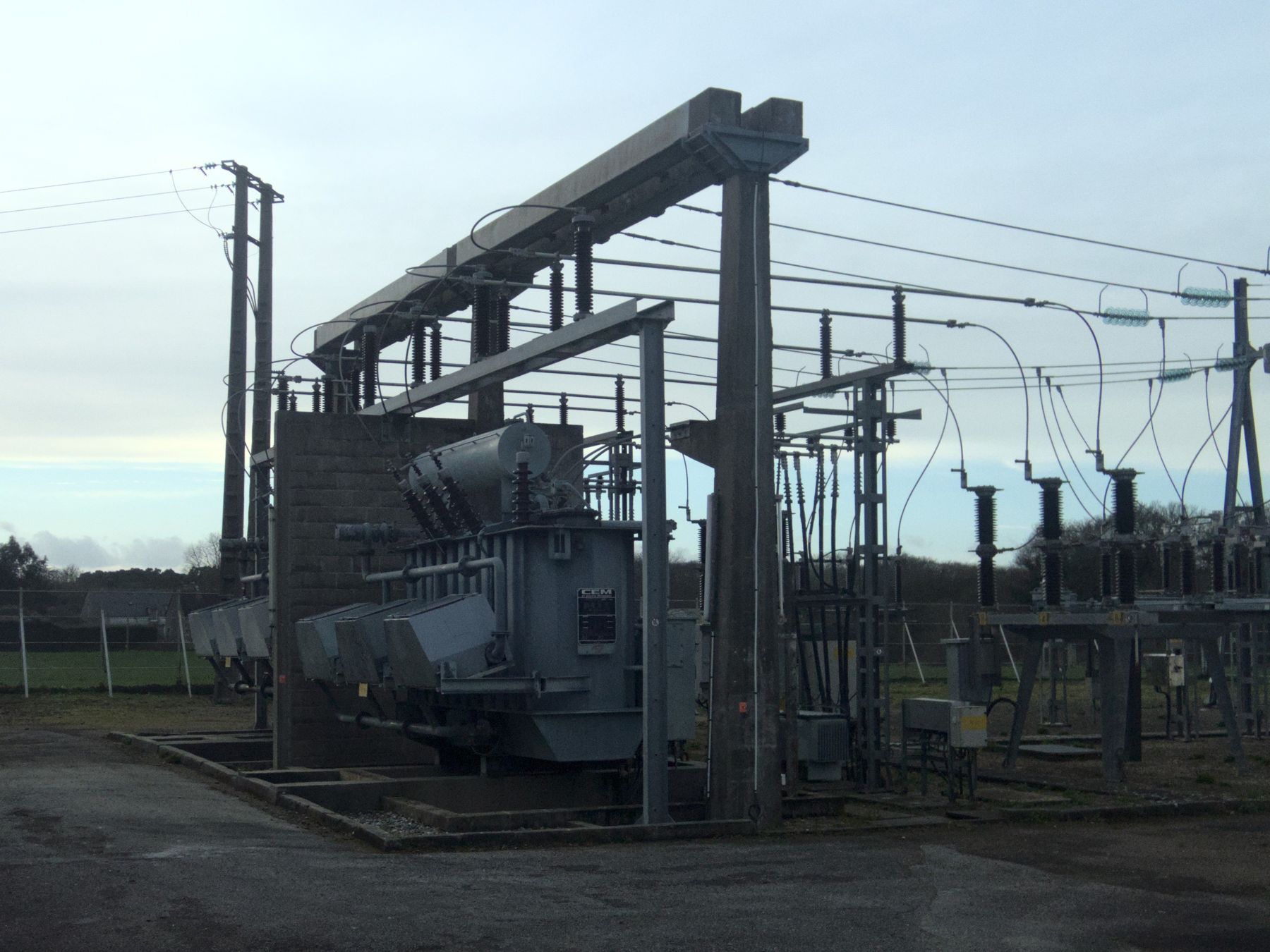
KOSTT has granted Junik Solar Park an export capacity of 100 MW. The park steps its power up in its own substation and joins the national transmission line between Prizren 2 and Fierzë.
Two 80 MVA transformers, four 220 kV bays and fourteen 35 kV cells.
A new double-circuit overhead line, looped in and out of the Prizren 2 – Fierzë circuit.
Once built, the connection assets pass to KOSTT, the transmission system operator.
Registered with ARBK in Deçan on 7 September 2021 to develop photovoltaic projects in Kosovo.
KOSTT, Kosovo’s transmission system operator, first consents to two connections of 50 MW each (50 + 50) at the 220 kV Prizren 2 – Fierzë line (technical information no. 1907, 20 September 2022).
Feasibility and environmental and social impact study for the 100 MWp bifacial PV park, Junik A & B.
PVsyst simulation confirms 145 GWh a year at a performance ratio of 88%.
The Ministry of Environment, Spatial Planning and Infrastructure approves the building conditions for Junik Solar Park A+B, 100 MW, on 4 August 2025. They are valid for 24 months.
KOSTT changes the approval from two 50 MW connections to a single 100 MW connection for the whole park.
EPC contract, the 35/220 kV substation and the 8 km line, then commissioning within about 12 months of construction start.
Aerial photographs of the Junik project area, taken by drone in June 2025.
Panoramic Aerial View
Lake & Surroundings
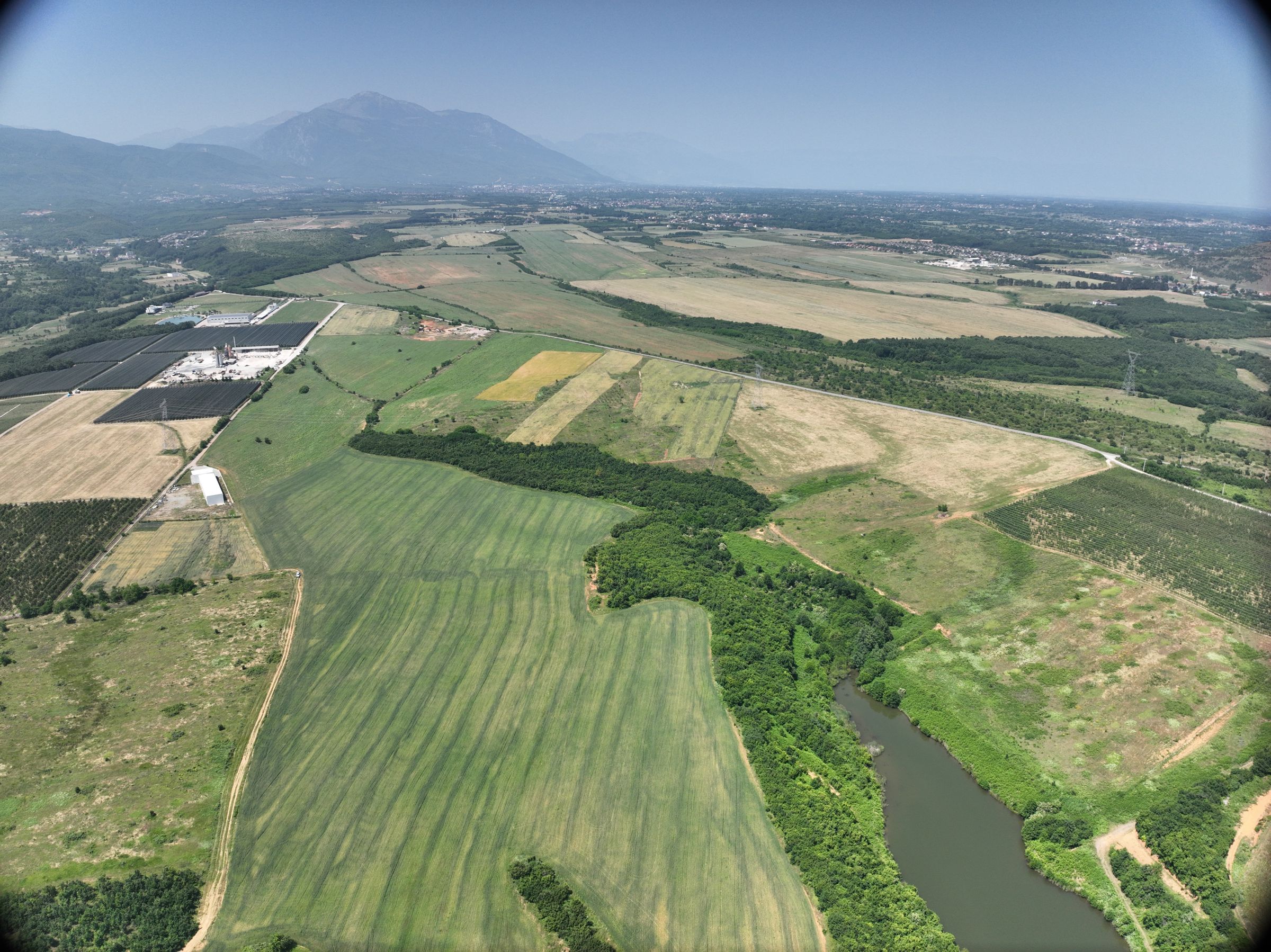 Mountain Panorama
Natural Landscape
Layout of the 100 MWp panel field of Junik Solar Park A & B, with and without the orthophoto, as submitted for the building conditions.
Junik Solar Park is backed by 31 documents from Kosovo’s ministries, the Municipality of Junik, KOSTT and independent engineers. Open any document to see a preview of its first page. Full copies are shared with investors and partners on request.
This is a protected preview. We send the full document to verified investors and partners.
In 2024 Kosovo used 6,611 GWh of electricity. Nine-tenths of what it produced came from lignite plants, and the rest of the demand had to be imported. Over the past decade consumption grew by about 1.4% a year, driven by households.
Sources: Energy Regulatory Office (ERO), Annual Report 2024; Ministry of Economy, Energy Strategy of the Republic of Kosovo 2022–2031. Demand includes transmission and distribution losses. In 2024 demand dipped 1.3% while contracted imports rose 29%.
The figures come from the project’s own studies, not from estimates.
1,450 kWh per kWp per year on fixed south-facing tables, simulated with Meteonorm data for Junik.
Own 35/220 kV substation and a short 8 km line to the transmission grid.
Environmental impact assessment completed and building conditions issued by the Ministry.
About 4.4 million tonnes of CO₂ avoided over 30 years in a lignite-heavy system.
For investment, partnership or energy offtake enquiries about Junik Solar Park, send us a message and we will reply with the project documentation.